
Call us now :07971459206
 Send Inquiry
 Send Inquiry
Tension Controller
Price 12000 INR/ Unit
MOQ : 1 Unit
Tension Controller Specification
- Features
- Auto and manual mode, fast response, set-point memory, overload protection
- Phase
- Single Phase
- Connectivity Type
- Terminal Block, RS485
- Protection Level
- IP20
- Current
- Max. 2A
- Sensor Type
- Load Cell
- Installation Type
- Panel Mounting
- Frequency
- Megahertz (MHZ)
- Output
- Relay, 4-20mA Analog, RS485
- IP Rating
- IP20
- Usage & Applications
- Industrial tension control for web, wire, film, textile processing
- Display
- Digital LED/LCD
- Mounting Type
- Panel Mount
- Measuring Range
- 0~100% (adjustable)
- Switch Type
- Push Button, Rotary Knob
- Product Type
- Tension Controller
- Operating Temperature
- -10C to 50C
- Working Temperature
- 0C to 45C
- Input
- AC 220V / 110V, 50/60Hz
- Application
- Industrial
- Supply Voltage
- 220V AC 10%
- Accuracy
- 0.5%
- Dimension (L*W*H)
- 96mm x 48mm x 90mm
- Weight
- Approx. 400g
- Environment Humidity
- 10% to 90% RH (non-condensing)
- Data Interface
- RS485 MODBUS
- Response Time
- <10 ms
- Material
- ABS body, flame retardant
- Power Consumption
- Less than 15W
- Sampling Rate
- 500 samples/sec
- Control Mode
- Automatic / Manual
- Panel Cut-out Size
- 91mm x 45mm
- Alarm Function
- Over-tension and sensor error indication
Tension Controller Trade Information
- Minimum Order Quantity
- 1 Unit
- Delivery Time
- 4-5 Days
- Main Export Market(s)
- Western Europe, Middle East, Africa, Central America, South America, Australia, Asia, Eastern Europe, North America
- Main Domestic Market
- All India
Tension Controller About
Input: Load cell (Up to Two in parallel)
Excitation: 10 VDC
Control Output: Analog 0 to 5VDC
Operating voltage: 24VDC +/-10%
Display: 4-digit 7-segment, 0.56 inch red LED
Keyboard: 4-keys
Digital Input: Auto/Stop mode enable from Front
Enclosure: Panel mount, General purpose, Metallic
Dimension: Bazel: 96 x 96 x 100 mm (D)
Cut-out: 92 x 92 mm
FUNCTIONAL DESCRIPTION:
This unit will provide excitation to Loadcell. It will support up to two load cells.
Unit accepts analog input signal from load cells.
Based on Loadcell input, current value of tension will be displayed.
User will be able to set desired value of tension as set point. Control parameter: P, I & D will be settable.
In auto mode, unit will generate control output: 0 to 5VDC using PID algorithm.
This output can be used to control tension using breaking system.
Visual indication of control value will be available on front plate.
When Stop is pressed, control output will be set to Zero.
User will be able to set desired value of control output.
Versatile Control Modes
Transition seamlessly between automatic and manual control to suit different operational needs. The controller's precise feedback from load cell sensors ensures constant tension regulation, supported by quick response times. This dual-mode functionality enables flexibility for a range of industrial processing applications such as web handling, wire manufacturing, and film production.
Reliable Safety and Alarming
Integrated with advanced alarm functions, the device promptly alerts users to over-tension conditions and sensor errors. Set-point memory and overload protection prevent operational mishaps, ensuring the safety of machinery and materials. Its flame-retardant ABS enclosure and IP20 protection make it suitable for demanding industrial settings while promoting operational reliability.
Streamlined Installation and Connectivity
Designed for panel mounting with a standard 91mm x 45mm cut-out, installation is straightforward. Connectivity is enhanced through terminal blocks and RS485 MODBUS data interface, accommodating various industrial control systems. Digital LED/LCD display provides clear real-time readouts, while rotary knob and push button controls guarantee effortless adjustments and operation.
FAQ's of Tension Controller:
Q: How does the automatic and manual control mode benefit my industrial tension applications?
A: Automatic mode ensures real-time, precise tension adjustments based on load cell feedback, reducing operator workload and material waste. Manual mode provides flexibility for specialized process needs or during system setup and maintenance.Q: What safety features does the tension controller include?
A: The controller features alarm functions for over-tension and sensor errors, set-point memory to save preferred tension levels, and overload protection to safeguard your equipment and materials against damage.Q: Where can I install this tension controller, and what are its mounting requirements?
A: This device is designed for panel mounting with a cut-out size of 91mm x 45mm. Its compact dimensions (96mm x 48mm x 90mm) and lightweight build (approx. 400g) make it suitable for most industrial control panels.Q: When should I use the RS485 MODBUS interface?
A: Utilize the RS485 MODBUS interface for remote monitoring, integration with centralized automation systems, or when real-time data is required for process optimization in a networked industrial environment.Q: What is the process for switching between automatic and manual modes?
A: Switching modes is simple using the front-panel push button or rotary knob. The digital display indicates the current mode, allowing operators to transition seamlessly between settings during operation or process changes.Q: How does the controller maintain high accuracy and reliability?
A: With a sampling rate of 500 samples/sec and an accuracy of 0.5%, the controller quickly responds to tension changes. Its digital filtering, fast response time (<10 ms), and robust load cell input ensure stable and accurate performance, even in dynamic industrial settings.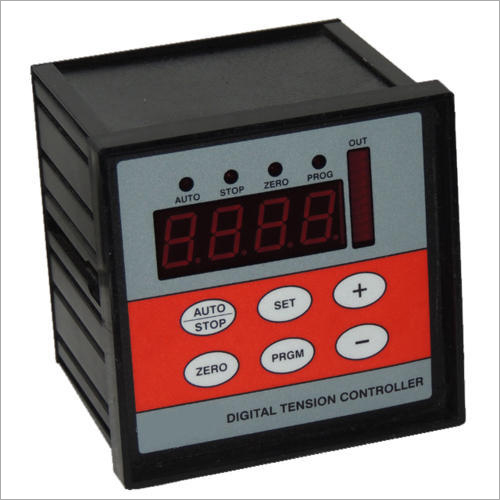
Tell us about your requirement

Price:
Quantity
Select Unit
- 50
- 100
- 200
- 250
- 500
- 1000+
Additional detail
Mobile number
Email

More Products in Weight Indicator Category
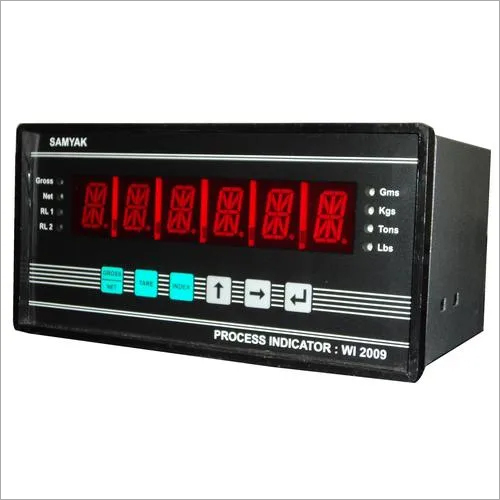
Weight Indicator WI 2009
Price 12000.0 INR / Unit
Minimum Order Quantity : 1 Piece
Product Type : Microcontroller based
Weight : Less than 1 kg Kilograms (kg)
Input : 4wire Load cell, Up to Four Single Load cell with 300 Ohms Resistor
Display : 6digit 16segment 0.8 Red LED
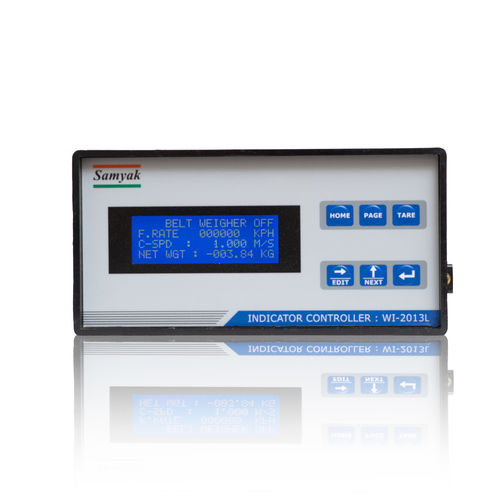
Belt Weighing Indicator WI 2013L
Price 20000.0 INR
Minimum Order Quantity : 1 Piece
Product Type : Belt Weight Indicator
Weight : 500 Grams (g)
Input : Load Cell, Proximity (PNP type)
Display : LED
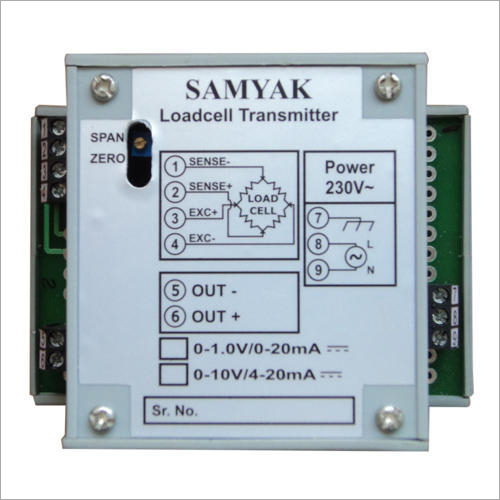
Load Cell Amplifier SMIT 1625
Price 4500.0 INR / Unit
Minimum Order Quantity : 1 Unit
Product Type : Load cell Amplifier
Weight : Less than 1 KG
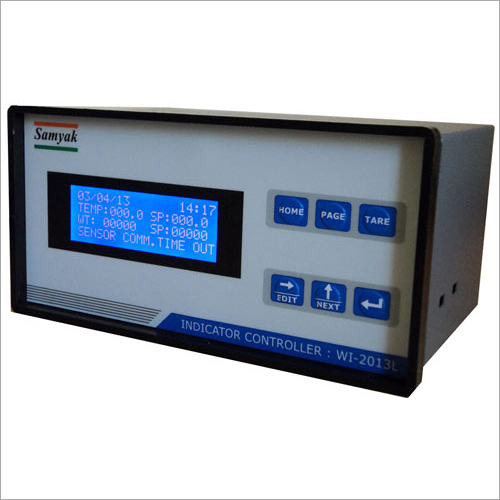
Weight Indicator WI 2013L
Price 20000.0 INR / Unit
Minimum Order Quantity : 1 Piece
Product Type : It is based on a popular 8bit microcontroller
Weight : Less than 1kg Kilograms (kg)
Input : Load Cell, Proximity (PNP type)
Display : 20 Characters x 4 Line LCD with back light

 Send Inquiry
Our Products


901, 9th Floor, SKD Surya ICON, AEC Cross Road, Naranpura,Ahmedabad - 380013, Gujarat, India

Mr. Rushabh Gandhi
(Marketing Manager)
Mobile :07971459206
 Send Inquiry
 Send SMS
 Call Me Free
Developed and Managed by Infocom Network Private Limited.
 English
 Spanish
 French
 German
 Italian
 Chinese (Simplified)
 Japanese
 Korean
 Arabic
 Portuguese